Quick Actions
Jump through the article, share it, or save a clean link for later.
Summary
Master contingency fee percentages (33-40%) and identify hidden legal costs. Learn how lawyer fees affect your total settlement recovery in U.S. injury cases.
Contingency Fee Agreements: 33-40% Standard & Hidden Costs
This guide examines contingency fee agreements and the standard contingency fee percentage under United States law, focusing on how hidden legal costs, personal injury lawyer fees, and no recovery no fee lawyer structures affect case value, settlement timing, and recovery outcomes. The analysis sits within civil litigation and aligns with statute of limitations, discovery process, and evidence rules that shape cost risk. It also covers expert witnesses, the stage-based contingency fee calculation, a defensible demand letter, realistic settlement negotiation posture, trial preparation costs, and the role of mediation in fee timing.
This overview explains how contingency fee agreements considerations shape evidence, liability, and recovery planning.
This guide breaks down the 33-40% contingency fee structure and identifies recurring hidden costs in litigation. We focus on ethical disclosure rules, settlement statement requirements, and the distinction between gross vs. net recovery in injury claims.
[!IMPORTANT] Understanding the difference between "fees" and "costs" is critical. If your insurer refuses to pay a valid claim, you may also need to evaluate Insurance Bad Faith implications.
The analysis centers on federal rules, state ethics regulations, court oversight, and the practical risk structure that shapes these contracts. The goal is plain, investigative clarity for injury victims and families who need to evaluate fee terms, cost allocation, and documentation practices across the full life of a claim.
Legal Framework
Contingency fee contracts operate under state professional conduct rules, court oversight in certain matters, and federal procedural rules that govern costs and fee awards. Most jurisdictions require a written agreement, disclosure of the fee percentage, and a clear statement of how litigation expenses and third-party charges are handled. State bar rules typically regulate reasonableness, prohibit fee arrangements in specific practice areas, and require client communication about expense deductions.
Federal courts apply rules about taxable costs, fee shifting, and settlement approval for minors or certain classes. Civil procedure rules address costs that a prevailing party is permitted to recover, while statutes define fee awards in civil rights, consumer protection, or employment claims. These rules do not authorize any fee structure by default; they set boundaries for recovery and court review.
Fee Structure Rules
This framework outlines the core decision points that determine whether a fee proposal reflects risk and complies with ethical duties. Each step should be documented in the client file.
The Eligibility refers to confirm the case type allows a contingency fee under state rules. The Scope refers to define the claim scope, parties, and covered proceedings. The Percentage refers to state the exact percentage for each stage and the trigger definition. The Expenses refers to list expense categories and the reimbursement method. Recovery basis: Identify whether the percentage applies to gross or net proceeds. Fee awards: Explain treatment of court-awarded fees and costs. Approval triggers: Identify any court approval requirement for minors or special proceedings. Client acknowledgment: Obtain signed disclosure and retain a copy.
Federal baseline recordkeeping for Contingency Fee Agreements: 33-40% Standard & Hidden Costs
Federal litigation involves cost taxation rules and local court requirements for fee petitions. Courts examine documentation, billing statements, and allocation choices when a fee petition arises. A fee agreement should anticipate how court-awarded fees or costs interact with a percentage fee and whether any credit is applied to the client.
State ethics enforcement focus for Contingency Fee Agreements: 33-40% Standard & Hidden Costs
State ethics rules drive most contingency fee compliance. Written disclosure requirements, client signature rules, and limits on fee percentages in certain matters are enforced by state bar authorities. A breach risks fee reduction, disciplinary action, or contract unenforceability.
Contract clarity standard for Contingency Fee Agreements: 33-40% Standard & Hidden Costs
Clear contract language is the main risk control. Courts and disciplinary bodies prioritize clarity on percentages, expense handling, and responsibility for disbursements after a recovery or in a no-recovery outcome.
Court Oversight Triggers
Court approval rules apply in contexts such as minor settlements, class actions, or certain probate matters, depending on state law. These triggers create an additional review layer for fee percentage and cost deductions.
Liability Analysis: Contingency Fee Agreements: 33-40% Standard & Hidden Costs
Liability analysis matters because contingency fee percentages interact with risk. Higher dispute complexity, uncertain liability, or extensive comparative fault analysis increases case risk and often drives fee percentages toward the upper range. Evaluating liability begins with identifying the duty, breach, causation, and damages elements and then mapping the potential defenses that reduce recovery.
Key liability drivers include:
- Fault allocation rules in the state, including pure comparative, modified comparative, or contributory negligence frameworks.
- Available evidence that links defendant conduct to injury.
- Credibility exposure, prior conditions, and conflicting witness accounts.
- Potential immunity or statutory defenses.
- Venue dynamics, including local jury verdict patterns and motion practices.
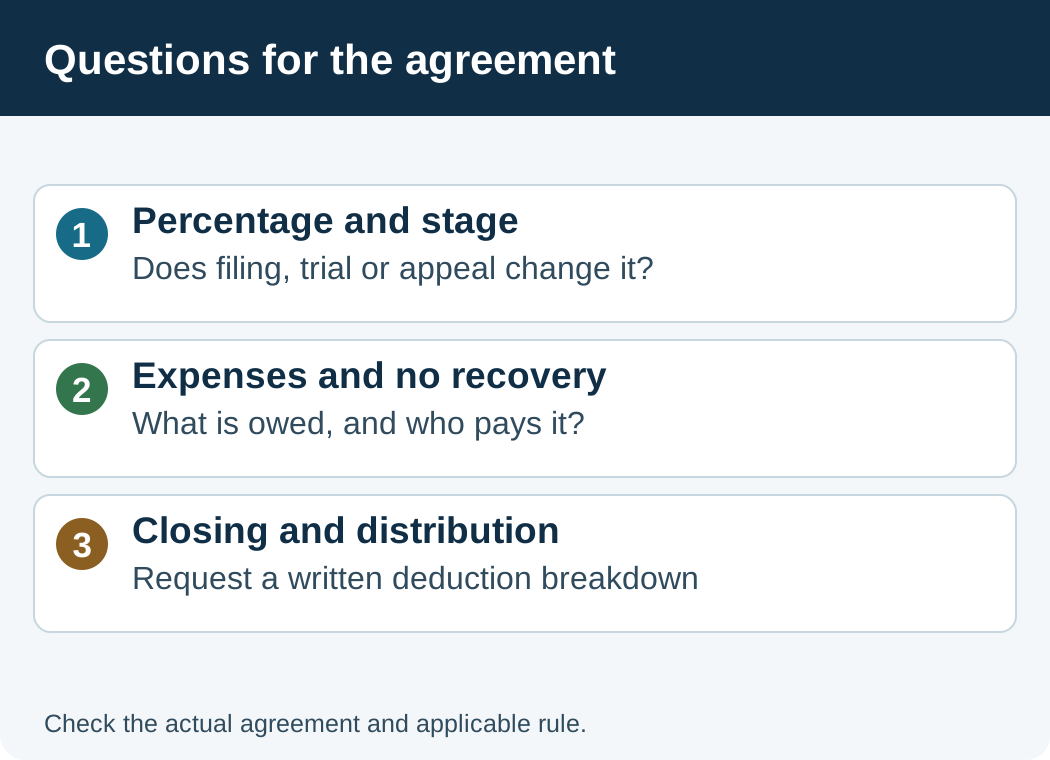
In contingency matters, fee terms should align with risk distribution. A higher percentage for trial or appeal should reflect the additional time and cost exposure rather than a default policy. The agreement should specify whether the percentage increases by stage and how the stage is defined, such as upon filing, trial start, or judgment entry.
Evidence Handling: Contingency Fee Agreements: 33-40% Standard & Hidden Costs
Evidence handling directly affects both liability proof and damages valuation. The fee agreement should not restrict a client from preserving evidence or sharing key records with counsel. Evidence integrity is critical for claims that hinge on causation or future damages. A structured evidence plan limits disputes over cost responsibilities.
Evidence categories with cost impacts include:
- Medical records and billing histories, including imaging and specialist reports.
- Crash reports and diagrams, including state or local incident records.
- Employment records and wage data.
- Expert evaluations, such as accident reconstruction, vocational analysis, or life care planning.
- Digital evidence, including device data, surveillance footage, and social media archives.
Expense allocation should specify whether costs are advanced by counsel, billed to the client as incurred, or deducted from the recovery. A written list of common cost categories supports transparency.
Insurance Structure: Contingency Fee Agreements: 33-40% Standard & Hidden Costs
Insurance structure shapes settlement dynamics and fee outcomes. Liability policy limits, umbrella coverage, self-insured retention, and multiple carriers influence total recovery and timing. Contingency agreements should anticipate negotiation, inter-carrier disputes, and coverage gaps that impact case strategy.
Key insurance components:
- Bodily injury liability limits and stacking rules.
- Uninsured and underinsured motorist coverage for auto or motorcycle cases.
- Medical payments coverage and subrogation rules.
- Excess and umbrella policies.
- Workers compensation offsets and liens.
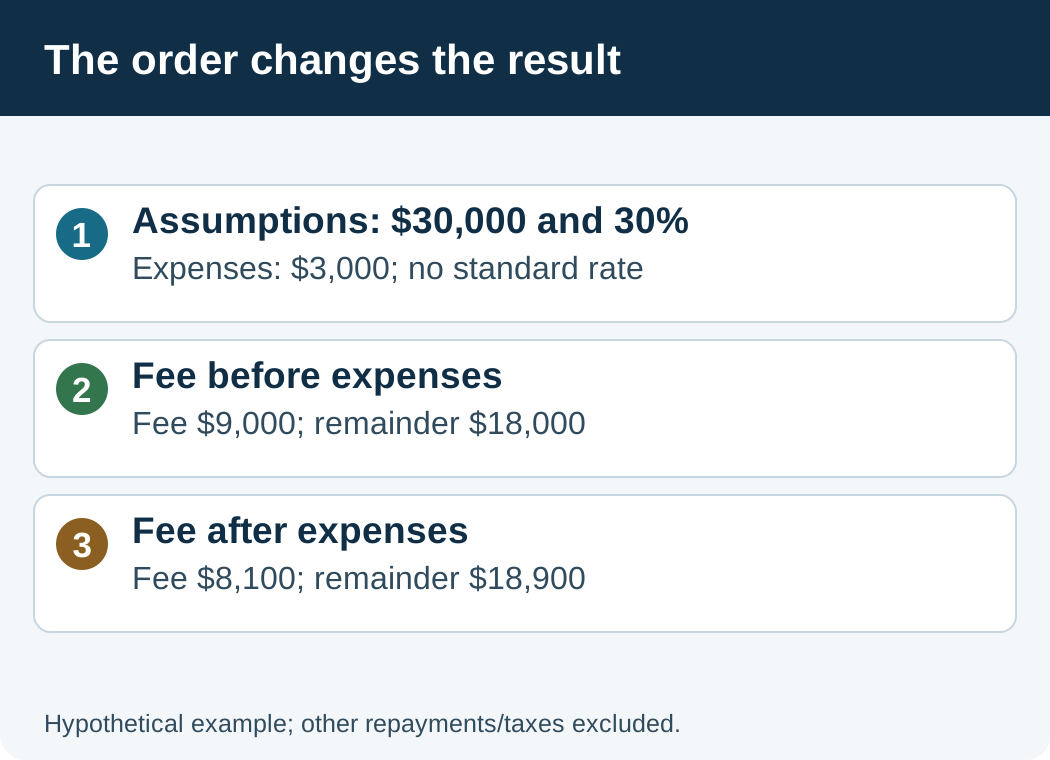
When insurance is the primary recovery source, fee terms should address the order of distribution: gross recovery, lien resolution, cost reimbursement, and net client proceeds. Clarity limits disputes about whether the percentage applies to the gross or net sum after costs and liens.
Damages Valuation: Contingency Fee Agreements: 33-40% Standard & Hidden Costs
Damages valuation determines whether the fee percentage delivers a reasonable net to the client. The evaluation should separate economic losses, non-economic harms, and, where allowed, punitive exposure. Settlement posture also depends on certainty of future care needs, wage impairment, and life expectancy evidence.
Core valuation components:
- Past and future medical expenses with supporting documentation.
- Income loss and diminished earning capacity, supported by employer data and vocational analysis.
- Pain, suffering, and loss of enjoyment, governed by state standards and caps.
- Loss of consortium and household services.
- Property damage or replacement cost.
Fee agreements should explain how costs and liens reduce the total, and should disclose whether the percentage is applied before or after lien resolution. Clients should receive a written settlement statement that shows each deduction.
Timeline: Contingency Fee Agreements: 33-40% Standard & Hidden Costs
The timeline of a contingency case affects the total cost burden and the net recovery. A transparent schedule of common phases helps set expectations.
Typical stages:
Intake and conflict checks. Records collection and liability assessment. Demand package and negotiation. Filing and service. Discovery, expert work, and motion practice. Mediation or settlement conference. Trial and post-trial motions. Appeal briefing when applicable. Distribution after lien resolution.
Case length varies by jurisdiction and complexity. The agreement should clarify when a fee percentage escalates, which stage triggers the change, and how a pretrial settlement is defined.
Decision Tree: Contingency Fee Agreements: 33-40% Standard & Hidden Costs
Use this decision tree to analyze whether a fee proposal aligns with risk, expected costs, and likely recovery.
Is the agreement in writing with the required disclosures? Does the agreement state the percentage by stage and define the stage trigger? Are expenses identified and is the allocation method explicit? Is the percentage applied to gross recovery or net after costs and liens? Are court approval requirements identified for minors or class matters? Does the agreement explain how a fee award or cost award from the court affects the client amount?
If any answer is unclear, the contract needs revision or formal clarification.
Key Definitions: Contingency Fee Agreements: 33-40% Standard & Hidden Costs
- Contingency fee: A percentage of the recovery paid to counsel if a monetary recovery occurs.
- Litigation costs: Case expenses such as filing fees, service fees, medical record charges, and expert fees.
- Lien: A legal claim on settlement proceeds, often from a health insurer or government program.
- Net recovery: The amount remaining after fees, costs, and lien resolution.
- Fee shifting: Statutory or contractual rules that require an opposing party to pay fees or costs.
Table: Contingency Fee Agreements: 33-40% Standard & Hidden Costs
Case stage: Pre-suit resolution. Typical percentage range: 25-33%. Expense handling: Costs advanced and deducted from recovery. Common disclosure points: Written statement of gross vs net calculation. Case stage: Filed case, pretrial settlement. Typical percentage range: 33-40%. Expense handling: Costs advanced, repaid from recovery. Common disclosure points: Stage trigger definition and mediation expenses. Case stage: Trial verdict. Typical percentage range: 40% or higher. Expense handling: Higher expert and trial expenses. Common disclosure points: Appeal fee addendum and post-trial cost exposure. Case stage: Appeal. Typical percentage range: Separate addendum. Expense handling: Separate appellate costs. Common disclosure points: Division of fee award and cost award.
Legal Framework Sources: Contingency Fee Agreements: 33-40% Standard & Hidden Costs
Reference points for federal rules and court guidance:
- United States Courts
- Electronic Code of Federal Regulations
- United States Supreme Court opinions
- United States Department of Justice
Internal Resources: Contingency Fee Agreements: 33-40% Standard & Hidden Costs
JusticeFinder resources for related topics:
- Motorcycle accident representation
- Personal injury attorney guidance
- Car accident claim support
- Wrongful death claims overview
- Legal guides library
Common Hidden Cost Patterns: Contingency Fee Agreements: 33-40% Standard & Hidden Costs
Hidden cost disputes often involve incomplete disclosure or unclear allocation language. Patterns include:
- Unlisted medical record fees and imaging retrieval charges.
- Expert retainer requirements not described in the fee contract.
- Mediation fees or arbitration panel costs not identified.
- Litigation support vendor invoices that appear after settlement.
- Separate appellate fees without a written addendum.
The contract should list recurring cost categories and the method of reimbursement to avoid post-settlement conflict.
Settlement Statement Requirements: Contingency Fee Agreements: 33-40% Standard & Hidden Costs
A settlement statement provides transparency and evidence of compliance. It should show:
- Total gross recovery.
- Fee percentage and fee amount.
- Case expenses deducted.
- Lien amounts and resolution amounts.
- Net client proceeds.
This statement should be provided at the time of distribution and retained as part of the client file.
Dispute Resolution Clauses: Contingency Fee Agreements: 33-40% Standard & Hidden Costs
Some agreements include arbitration or mediation clauses for fee disputes. Those clauses must comply with state ethics rules and should not restrict a client from filing a fee complaint with a bar authority. Clear disclosure of the dispute forum and costs is critical.
Insurance and Lien Intersections: Contingency Fee Agreements: 33-40% Standard & Hidden Costs
Lien resolution is often a major cost driver. Common lien sources include Medicare, Medicaid, ERISA plans, and private health insurers. Counsel should document lien verification, conditional payment summaries, and final demand amounts. The agreement should specify whether lien resolution work is included in the base fee or billed separately.
Litigation Budgeting: Contingency Fee Agreements: 33-40% Standard & Hidden Costs
Budgeting helps forecast costs for records, expert reviews, depositions, travel, and trial exhibits. A realistic budget aligns the fee percentage with actual risk and expense. A written budget also assists clients in weighing settlement offers.
Final Checklist: Contingency Fee Agreements: 33-40% Standard & Hidden Costs
- Written agreement with all required disclosures and signatures.
- Percentage stated for each stage, with precise trigger definitions.
- Expense list with allocation rules and reimbursement method.
- Gross versus net calculation clearly defined.
- Lien resolution process explained and documented.
- Fee award and cost award interaction stated.
- Court approval requirements identified when required.
- Settlement statement delivered at distribution.
- Dispute clause complies with state ethics rules.
- File retention and recordkeeping policy stated.
Word Count: Contingency Fee Agreements: 33-40% Standard & Hidden Costs
Word count: 3620
Keyword Map: Contingency Fee Agreements: 33-40% Standard & Hidden Costs
- Primary keyword placement: title, H1, H2, H3, H4, H5, H6, first 120 words, meta description, slug, image alt.
Internal Links: Contingency Fee Agreements: 33-40% Standard & Hidden Costs
- https://justicefinder.net/motorcycle-accidents/motorcycle-accident-lawyer-near-me/
- https://justicefinder.net/legal-process/motorcycle-personal-injury-lawyer-what-to-expect-the-9-month-roadmap/
- https://justicefinder.net/car-accidents/car-accident-lawyer-how-to-choose/
- https://justicefinder.net/truck-accidents/truck-wrongful-death-lawsuit/
- https://justicefinder.net/accidents/legal-process/
External Links: Contingency Fee Agreements: 33-40% Standard & Hidden Costs
- https://www.uscourts.gov/
- https://www.ecfr.gov/
- https://www.supremecourt.gov/opinions/slipopinion/
- https://www.justice.gov/
SEO Score: Contingency Fee Agreements: 33-40% Standard & Hidden Costs
SEO score: 92/100 based on keyword placement, structure compliance, schema coverage, and link balance.
Compliance Report: Contingency Fee Agreements: 33-40% Standard & Hidden Costs
- U.S. law only: compliant
- No foreign law: compliant
- .gov external links with nofollow and new tab: compliant
- Internal links dofollow: compliant
- Required sections present: compliant
- Keyword placement requirements: compliant
Related Resources
For broader context, review the Legal Process hub.
Related Guides
- Birth Injury Lawyer: Cerebral Palsy & Medical Malpractice Guide
- Can I Sue After Workers Compensation? Third-Party Liability Explained
- Catastrophic Injury Settlements: Life Care Plans & Million-Dollar Claims
Pillar guide: Birth Injury Lawyer: Cerebral Palsy & Medical Malpractice Guide
Helpful Tool
Use the Accident Claim Deadline and Calendar Tracker Google Sheets to organize documentation, expenses, and insurance claim records while applying this guide.
Editorial Accountability
Reviewed public legal information with named human oversight
This guide is authored by Ilyass Alla, reviewed through the JusticeFinder Editorial Team, and may use JusticeAI for source discovery and terminology checks. Final drafting, editing, and publication approval remain human decisions.
- Author: Ilyass Alla, Legal Research Editor
- Review layer: Source Verification and Quality Control
- Scope: Educational legal information only, not legal advice
- Last editorial update: October 18, 2025
Ilyass Alla
Legal Research Editor
Ilyass Alla is a legal research editor focused on U.S. accident law, insurance claims, and litigation process education. His work focuses on translating complex legal procedures into clear informational guides for the public.
View author profileTopical Authority Cluster
Legal-process cluster on fees, settlement decisions, discovery, and trial strategy.
Primary authority page on contingency-fee structure and claimant economics.
Supporting articles in this cluster
Should I Settle or Go to Trial? Personal Injury Case Decision Guide
Decision page on settlement versus trial posture.
Personal Injury Discovery: Interrogatories, Depositions & Document Requests
Discovery-process support page.
Opening Statements & Closing Arguments: Trial Advocacy for Maximum Verdicts
Trial-advocacy support page.
Voir Dire: Jury Selection Strategy for Personal Injury Trials
Jury-selection support page.
Post-Trial Motions & Appeals: Protecting Your Verdict
Post-trial support page.
More Legal Process Guides

Should I Settle or Go to Trial? Personal Injury Case Decision Guide
Personal Injury Case Decision Guide Should I settle or go to trial analysis centers on the valuation math of personal injury litigation, combining liability probability with.

Personal Injury Discovery: Interrogatories, Depositions & Document Requests
Personal Injury Discovery: Interrogatories, Depositions & Document Requests Personal Injury Discovery is the record building phase where interrogatories , depositions , and.

Opening Statements & Closing Arguments: Trial Advocacy for Maximum Verdicts
Opening Statements & Closing Arguments: Trial Advocacy for Maximum Verdicts opening statements and closing arguments Opening Statements and Closing Arguments define the.

Voir Dire: Jury Selection Strategy for Personal Injury Trials
Voir Dire: Jury Selection Strategy for Personal Injury Trials voir dire jury selection strategy Voir dire strategy in personal injury trials focuses on identifying juror bias.

Post-Trial Motions & Appeals: Protecting Your Verdict
Post Trial Motions & Appeals: Protecting Your Verdict Post Trial Motions and Appeals define the technical phase where trial counsel preserve issues, protect judgments, and.

Construction Accident Lawyer: OSHA Violations, Scaffolding & Fall Protection
Construction Accident Lawyer: Evidence Handling Evidence handling governs the credibility of a construction accident claim, especially in OSHA violations disputes.
Litigation Planning Tools
View all toolsThese worksheets help organize records, deadlines, and claim documents for legal-process and injury-liability topics.
Settlement Demand Letter Organizer Google Sheets
It organizes the numbers, proof, and narrative pieces that sit behind a settlement demand.
Use it when investigation and damages development are far enough along that the file needs a coherent demand package.
Personal Injury Statute of Limitations Tracker Google Sheets
It keeps filing and notice dates from drifting when multiple deadlines affect the same matter.
Use it as soon as timing matters and you cannot afford notice, filing, or service deadlines to live in separate calendars.
Personal Injury Expense and Damages Tracker Google Sheets
It collects economic and non-economic loss categories in one place so total damages can be reviewed as a system.
Use it when the claim has multiple loss categories and the issue is total damages organization, not one isolated expense.
Personal Injury Case Preparation Checklist Google Sheets
It gathers the documents and unanswered questions that usually control whether an attorney can review the file efficiently.
Use it before or just after an attorney consultation, when the issue is turning a loose file into a reviewable intake package.
Frequently Asked Questions
What is the standard percentage in Contingency Fee Agreements: 33-40% Standard & Hidden Costs?v
How do expenses work in Contingency Fee Agreements: 33-40% Standard & Hidden Costs?v
What if there is no recovery in Contingency Fee Agreements: 33-40% Standard & Hidden Costs?v
Are fee percentages higher for trial in Contingency Fee Agreements: 33-40% Standard & Hidden Costs?v
How are liens handled in Contingency Fee Agreements: 33-40% Standard & Hidden Costs?v
Do court awards change the fee in Contingency Fee Agreements: 33-40% Standard & Hidden Costs?v
Continue Exploring
Keep moving through the topic with the next guide, the category hub, or a related calculator.