

Quick Answer
Does requesting a police report complete the driver filing?
Do not assume so. These are different processes. New York requires MV-104 within ten days for qualifying crashes; verify the rule in your state.

A police report can help organize what an agency recorded about a crash. Start by confirming who prepared it and which pages you received. Requesting a copy is different from filing a required driver crash report or notifying an insurer.
Scope: U.S. educational guidance with New York examples. This guide does not calculate every state's deadlines or determine liability, courtroom admissibility or coverage.
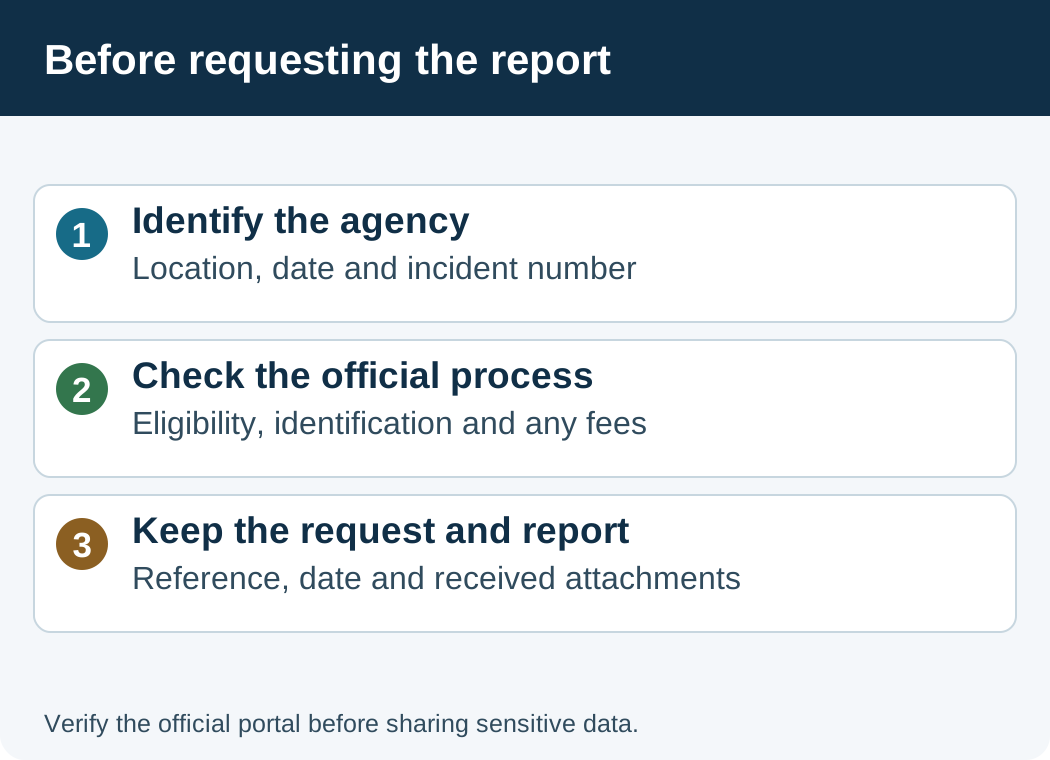
Identify the agency and official process
Record the crash date, location, incident number and responding agency. If you do not know which agency keeps the report, use verified official contact details to ask. Do not send license, insurance or medical information to an unverified portal.
For example, NYPD describes its report request options. New York DMV explains crash record access, including process requirements and charges. Reports may not be immediately available; check current conditions and whether a certified copy is needed. These New York routes are not a universal process for other states.
Separate the driver's filing obligation
Instructions for New York's MV-104 form require reporting within ten days a crash in that state causing death, injury or more than $1,000 damage to any one person's property. That is separate from requesting the officer's report. Read the complete form and verify your circumstances; neither that threshold nor that period is a nationwide rule.
Keep proof of any filing. For a crash in another state, check that state's responsible authority. Do not assume a police or DMV process also notifies your insurer.
Review what the copy actually says
Confirm that the record matches the crash date and place and includes the expected pages and attachments. Compare names, vehicles, location, diagrams and sources of statements with your own records. Distinguish officer observations from accounts attributed to other people. The copy does not by itself resolve every contradiction.
Document a discrepancy
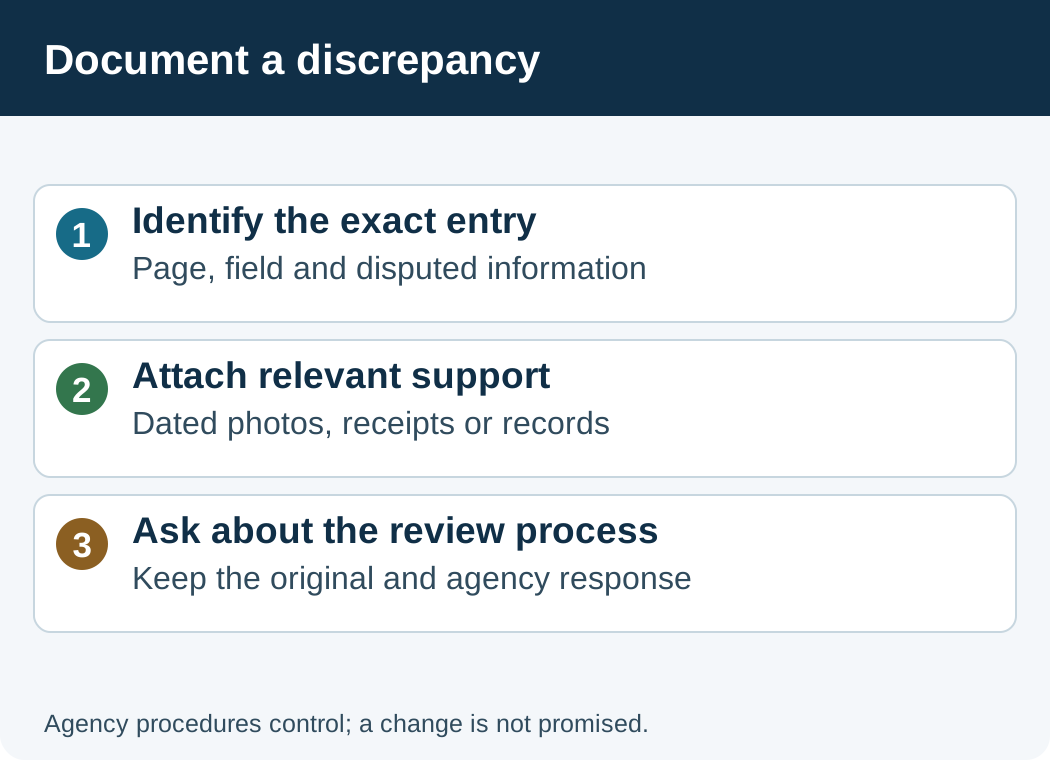
Identify the exact page and field. Briefly explain the disputed fact and attach relevant support, such as a dated photograph or record. Ask about the agency's correction or supplemental-information process. Keep the original, your request and the response. Do not alter the record and present it as a corrected official copy.
Organize the claim file
Keep the report, original photographs, insurance communications and treatment records separately identifiable. Record when and to whom you send a copy, using an appropriate channel for personal information. If someone treats a report statement as a final liability decision, ask for the basis and check the governing rule. This guide does not promise that every report statement is admissible in court.
Sources and date: NYPD, DMV and MV-104 sources checked October 2, 2026. The examples concern New York and do not replace review of your state or policy.

Frequently Asked Questions
Does requesting a police report complete the driver filing?
Where can I get a copy?
What if I find an error?
More Car Accidents Guides

How to Use the Loss-of-Use Rental Reimbursement Calculator
Learn how the loss-of-use and rental reimbursement calculator compares entered totals to limits, while separating pure arithmetic from coverage and liability decisions.

Multi-Vehicle Pileup Accident Claims
How multi-vehicle pileup accident claims work, including chain-reaction fault, multiple insurers, evidence, comparative negligence, injuries, and settlement.

What To Do After a Car Accident in Texas: A 2026 Guide
A Texas guide to what to do after a car accident: CR-3 crash reports, insurance notice, modified comparative fault, uninsured-motorist claims, deadlines.

Rear-End Collision Settlement
A guide to rear-end collision settlement value, including liability assumptions, evidence strength, and damage documentation.

Car Accident Lawyer: How to Choose the Right One (2026)
A 2026 guide to choosing a car accident lawyer, with selection criteria, evidence readiness, fee models, and decision steps.

Car Accident Attorney Near Me: Questions to Ask Before You Sign
A structured list of questions to evaluate a local car accident attorney, with evidence, fees, and case management guidance.
Claim Organization Tools
View all toolsUse these worksheets to organize evidence, treatment records, and insurance deadlines for a car-accident claim.
Car Accident Police Report Tracker Google Sheets
It prevents report numbers, officer contacts, request dates, and delivery status from getting buried in carrier correspondence.
Use it once a report number exists or a request is pending and you need the request history to stay visible.
Car Accident Checklist Google Sheets
It captures first-day facts before details in a car crash claim file scatter across notes, photos, texts, and claim calls.
Use it immediately after the event, while scene facts, contacts, and initial documentation are still easy to capture cleanly.
Car Accident Evidence Log Google Sheets
It keeps each proof item tied to a source, date, and why-it-matters note instead of leaving evidence loose in folders.
Use it when proof quality is the bottleneck and every photo, statement, or record needs a source trail.
Car Accident Case Preparation Checklist Google Sheets
It gathers the documents and unanswered questions that usually control whether an attorney can review the file efficiently.
Use it before or just after an attorney consultation, when the issue is turning a loose file into a reviewable intake package.
Guides for this topic

Continue Exploring
Keep moving through the topic with the next guide, the category hub, or a related calculator.
Found this useful?
Share this guide
Send this guide to anyone weighing an accident or insurance claim — it stays free, with no email gate.
Keep learning
Follow for more accident and insurance education
Short legal explainers on TikTok, visual case briefs on Instagram, daily threads on Threads.
Information only — not legal advice.
Editorial Accountability
About this guide and its AI host
JusticeFinder publishes this educational guide. Sophia Hayes is its educational AI host, not a licensed legal professional. Learn about source verification and editorial standards through the JusticeFinder Editorial Team profile and the sources cited in this guide.
- Scope: Educational legal information only, not legal advice
- Last editorial update: October 2, 2026

Sophia Hayes
Educational Accident & Insurance Awareness Host
Sophia Hayes is JusticeFinder's educational AI host and documentary-style narrator covering U.S. accident law, insurance literacy, and public safety. She is not a lawyer, attorney, legal representative, medical professional, or insurance adjuster.
View AI host profile