

Quick Answer
How long does a rideshare injury claim take?
There is no single duration. Notice, coverage, records and negotiation depend on facts, policies and applicable rules; stages do not replace legal deadlines.

Quick answer
A rideshare injury claim can move through stages, but it has no single duration. Incident notice, coverage investigation, injury documentation and negotiation are different processes. A trip receipt helps identify facts; it does not decide fault or confirm that a particular policy applies.
This guide concerns U.S. rideshare trips, not food delivery. Requirements depend on state law, policies and facts. The stages are an organization tool, not legal dates or a payment forecast.
Identify the incident and trip
Retain the receipt, trip identifier, route, date and time, available names and platform correspondence. Preserve original files as well as screenshots. Record whether you were a passenger, driver or third party: vehicle repair instructions for a driver do not determine coverage for a passenger's injury.
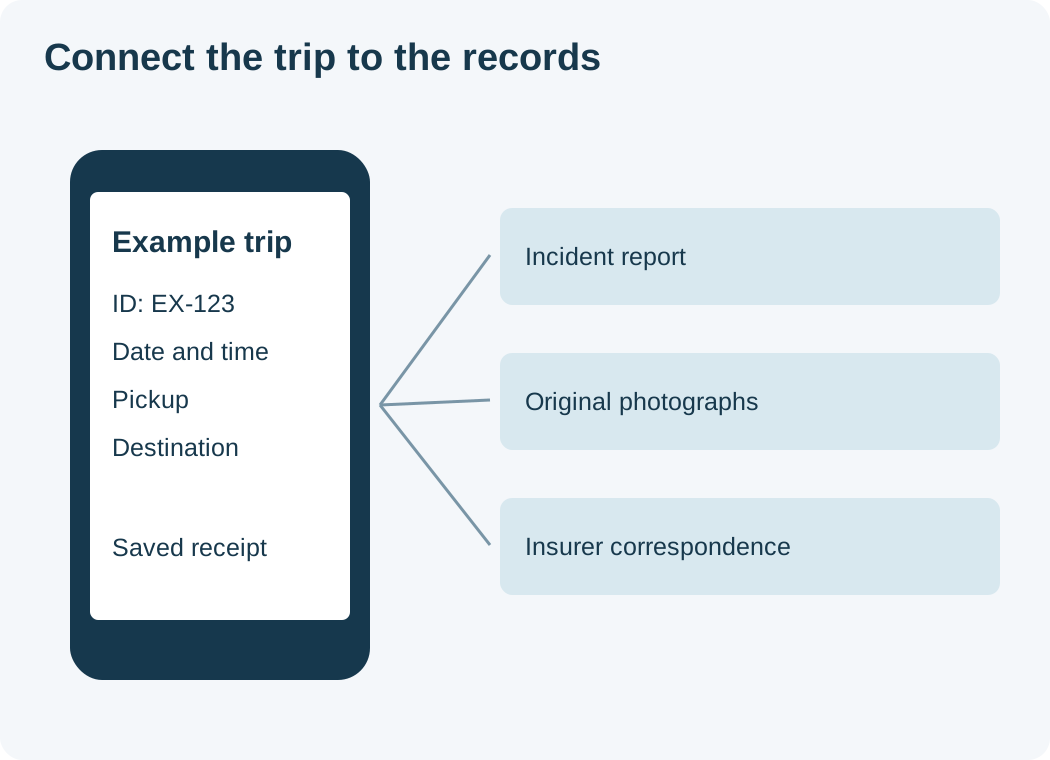
A useful chronology separates crash time, notice time and response time. Mark uncertainty when an exact time is unknown. Do not replace a remembered time with a receipt timestamp without explaining what each records.
Coverage review has its own questions
Ask for the claim number, insurer, reviewer contact and a written position when coverage is disputed. Uber describes coverage by trip status and other factors, distinguishing offline, available, and en route or on-trip. That description is not a decision about your incident. Check the policy and facts at the crash date rather than treating an advertised limit as a settlement offer.
Evidence of app status and evidence of fault answer different questions. A message can confirm a file exists without accepting that the driver caused an injury. Retain the two positions separately.
Track the document stage
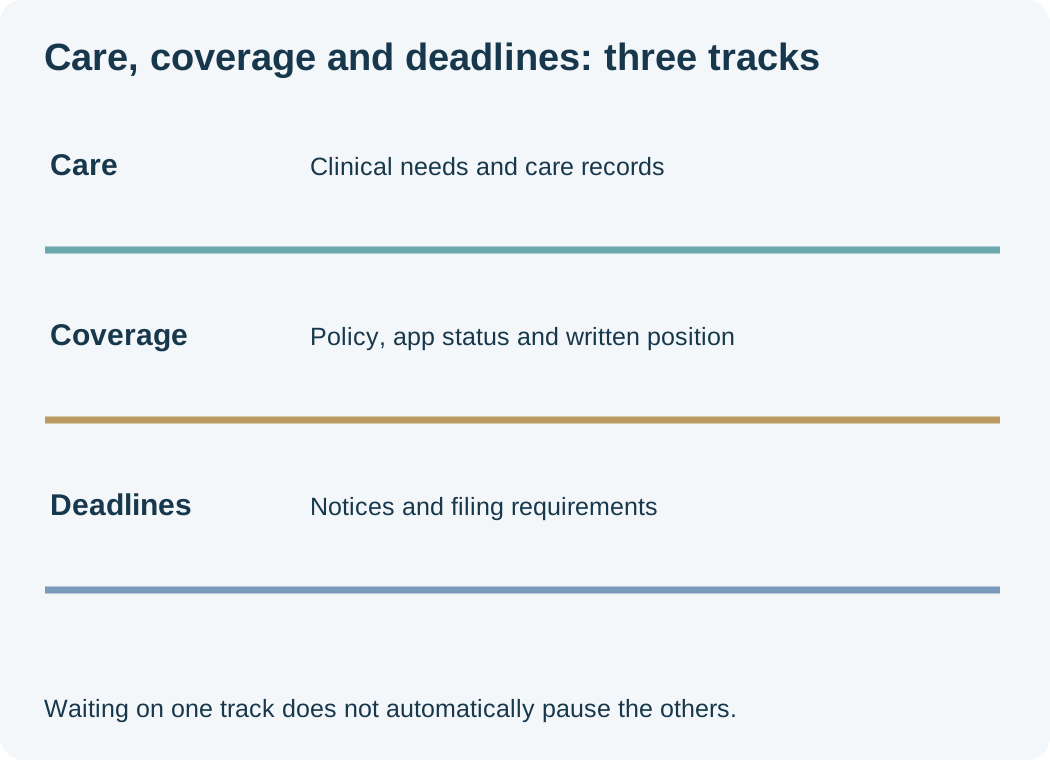
Check for missing visits and bills before the final review. Use a log like the medical-records guide. Treatment should follow clinical needs rather than a calendar intended to hurry or increase the claim.
Review the offer and release
Identify what is known and what remains open: work restrictions, documented prognosis, bills, reimbursement issues and each insurer's position. Do not assume a vehicle payment either closes or preserves injury claims; examine the actual document. Check which people, events and claims a release includes.
In an invented example, notice is logged Monday, a bill arrives Friday and coverage review remains open. The bill's arrival does not establish a payment duty that Friday or show that a legal deadline began then. Those are separate records.
Follow up on the unresolved step
Ask in writing what is missing, who requested it and which decision it prevents. Retain responses and resubmissions. Silence, evidence requests, coverage reservations, denials and offers require different follow-up questions. Get local review when a legal deadline approaches without waiting for a date promised by telephone.
Related guidance: demand letters and future medical expenses. Coverage source checked October 2, 2026. JusticeFinder provides education, not representation or a prediction of outcomes.
Frequently Asked Questions
Does a trip receipt prove coverage?
Does waiting for an offer pause a legal deadline?
More Rideshare Accidents Guides

Rideshare Accident Police Report Guide
A rideshare accident police report should be checked for driver identity, vehicle details, app clues, witness names, insurance, and injuries.

Uber and Lyft Insurance Periods 1, 2, and 3 Explained
Uber and Lyft insurance periods 1, 2, and 3 explained, including app status, waiting, matched trip, active ride, coverage proof, and mistakes.

Uber Accident Insurance Coverage Explained
Uber accident insurance coverage explained - app periods, liability coverage, UM/UIM, contingent collision, driver and passenger claims, and coverage gaps.

Common Rideshare Accident Injuries
Common rideshare accident injuries include whiplash, fractures, head injuries, back injuries, soft-tissue damage, cuts, and emotional distress.

Is Uber or Lyft Liable for Accidents?
Whether Uber or Lyft may be liable after an accident depends on app status, driver conduct, platform coverage, state law, and claimant role.

Delivery Driver Accident Claims
Delivery driver accident claims depend on app status, delivery phase, driver fault, policy language, platform coverage, injuries, and wage loss.
Guides for this topic

Continue Exploring
Keep moving through the topic with the next guide, the category hub, or a related calculator.
Found this useful?
Share this guide
Send this guide to anyone weighing an accident or insurance claim — it stays free, with no email gate.
Keep learning
Follow for more accident and insurance education
Short legal explainers on TikTok, visual case briefs on Instagram, daily threads on Threads.
Information only — not legal advice.
Editorial Accountability
About this guide and its AI host
JusticeFinder publishes this educational guide. Sophia Hayes is its educational AI host, not a licensed legal professional. Learn about source verification and editorial standards through the JusticeFinder Editorial Team profile and the sources cited in this guide.
- Scope: Educational legal information only, not legal advice
- Last editorial update: October 2, 2026

Sophia Hayes
Educational Accident & Insurance Awareness Host
Sophia Hayes is JusticeFinder's educational AI host and documentary-style narrator covering U.S. accident law, insurance literacy, and public safety. She is not a lawyer, attorney, legal representative, medical professional, or insurance adjuster.
View AI host profile