

Quick Answer
What belongs in an injury demand letter?
Supported facts, documented treatment, a checkable loss ledger, a request and identifiable exhibits. Sending the letter does not itself file a lawsuit or pause a deadline.

Quick answer
An injury demand letter sets out the incident, the responsibility alleged, treatment, documented losses and the settlement request. Important claims should point to identifiable exhibits. The letter is a negotiation document; it does not itself file a lawsuit, decide coverage or require payment.
This guide concerns U.S. claim organization. State law, policy terms and case facts control legal rights and deadlines. Get local legal review promptly if a filing or notice deadline is near, particularly for a public-entity claim. Do not assume that sending a letter or continuing negotiations pauses a deadline while records arrive.
Build a checkable letter
Identify the correct recipient, claim number, incident date and your contact details. Follow with a short factual chronology. Distinguish what you observed, what a witness reports and what remains disputed. “Exhibit A contains photographs of the intersection” is checkable; “the insurer accepted all fault” requires a communication that actually says so.
Describe treatment with dates and references to records. Bills and clinical notes serve different purposes: one records charges, the other records documented care. Do not turn a possible future procedure into a confirmed expense. If prognosis remains open, identify the unresolved question and the records still requested.
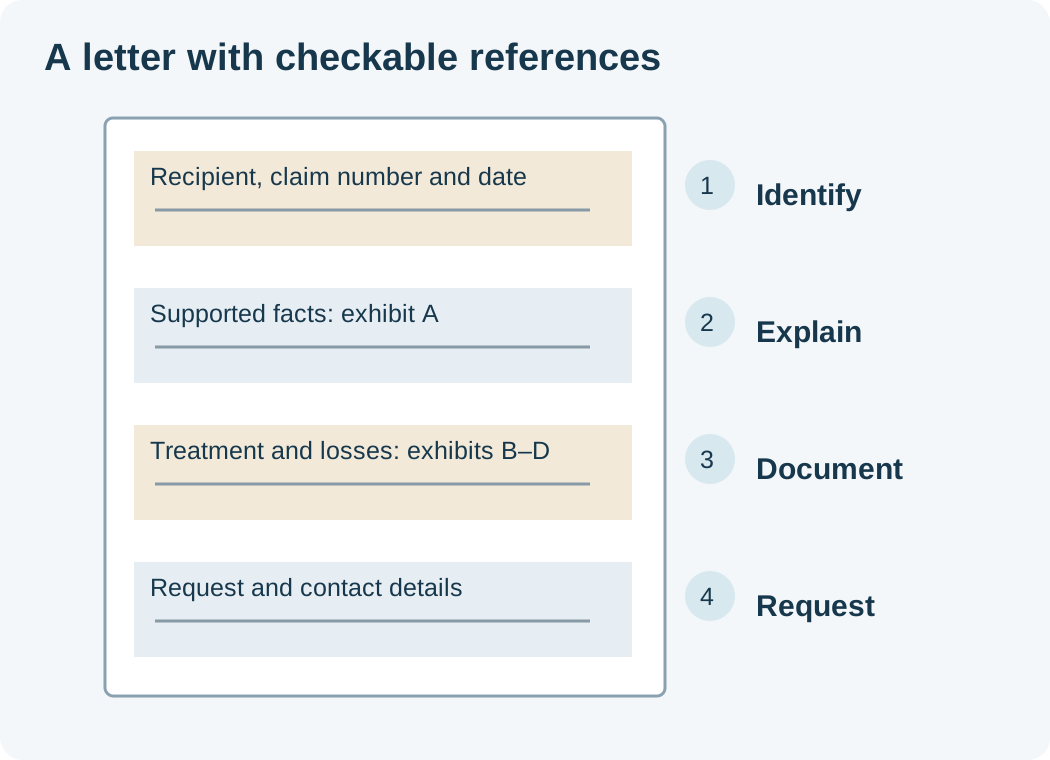
Use one exhibit index
Use identical labels in the letter and filenames. Preserve originals and send copies. Keep a missing-record list; an index cannot replace a missing exhibit. Avoid unnecessary personal identifiers and use an appropriate secure delivery channel for sensitive records. The medical-records guide explains access requests and their limits.
A loss ledger is not a settlement estimate
In an invented example, medical bills total $3,200, wage records support 40 hours at $25 and transport receipts total $200. The subtotal is $3,200 + (40 × $25) + $200 = $4,400. Check that an invoice, reimbursement or wage period has not been counted twice.
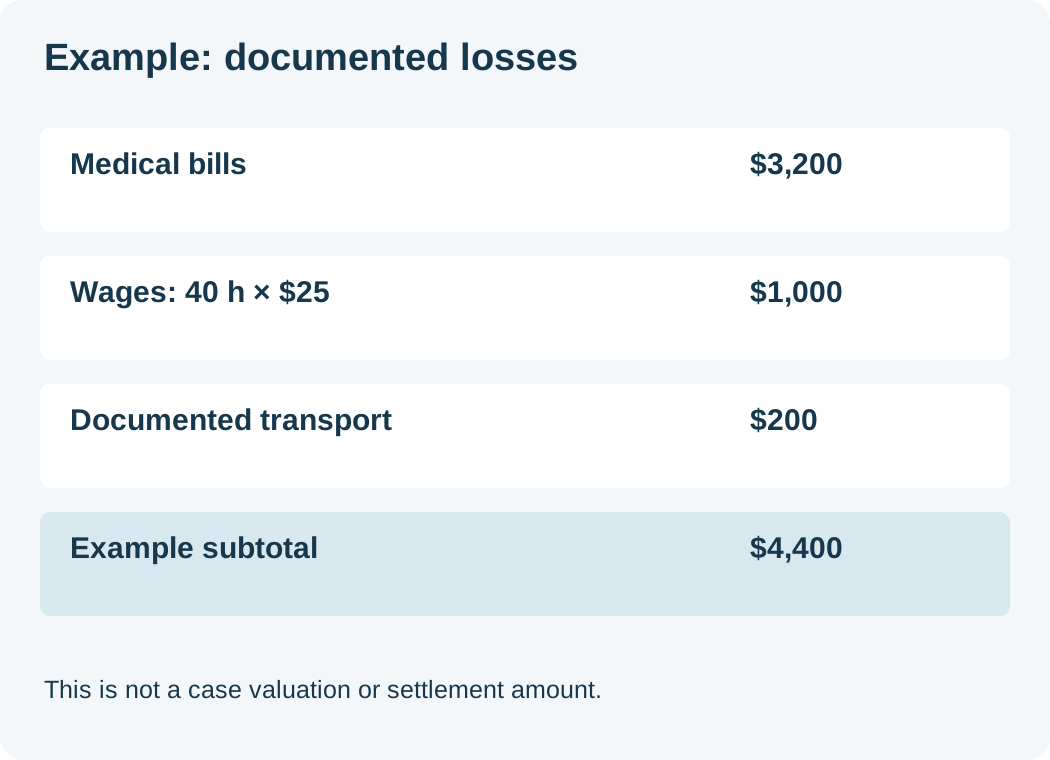
Billed charges, amounts paid by insurance and reimbursement demands can differ. List those differences without adding each one as another loss. Medical reimbursement claims need separate review. An automatic multiplier does not turn this ledger into a defensible total case value.
Keep delivery and legal deadlines separate
Track the incident date, required notices, filing deadline, delivery date and requested response date separately. A reply date selected by the sender does not itself establish an insurer's legal duty. It is also not a statute of limitations. Verify the recipient and retain the exact final letter, attachments and delivery record.
When there is no response, ask in writing what is missing and who is reviewing the file. For an offer, compare its categories against the request; for a denial, identify the stated reason and policy provision. Administrative complaints and lawsuits are different processes. The California insurance department's consumer guide identifies delay and denial issues within its assistance scope; it does not establish a nationwide deadline triggered by a demand letter.
Settlement labels and releases have limits
Do not assume that writing “confidential” creates absolute protection. Federal Rule of Evidence 408 restricts certain evidentiary uses of negotiations about disputed claims and allows other uses. It is a federal admissibility rule, not a promise that every attachment is secret or a substitute for state rules. Obtain applicable review when confidentiality matters.
Before accepting an offer or signing a release, check which people, incidents, policies and claims it includes. Account for reimbursement obligations and prior payments. A document that closes a claim can have consequences very different from an acknowledgement that the letter arrived.
Use the generator as a draft
The injury demand letter generator organizes entered facts. It cannot verify fault, coverage, exhibits or a reasonable demand. Replace sample data, verify arithmetic and compare the draft with actual records. If treatment is unfinished, describe what remains unresolved without letting a deadline expire.
Related guidance: future medical costs and settlement negotiation. Primary sources checked October 2, 2026. JusticeFinder publishes educational information and does not provide legal representation.

Frequently Asked Questions
Is $4,400 the settlement value?
Does the generator check evidence?
More Legal Process Guides

How to Use the Average Settlement by Injury Type Tool
This reference withholds unsourced dollar bands. See listed injury types and value factors, then estimate from your records rather than a national average.

Arbitration Explained
Arbitration is a dispute-resolution process where an arbitrator reviews evidence and may issue a binding or nonbinding decision.

Dash Cam Evidence Guide
Dash cam evidence can clarify lane position, signals, speed, following distance, vehicle movement, impact sequence, and witness accounts.

How Lawyer Fees Work
How lawyer fees work in accident claims, including contingency fees, costs, liens, net recovery, fee agreements, settlement, and questions to ask.

Lost Wage Claims Explained: Steps, Evidence, and Mistakes
How lost wage claims work after an accident - what counts as wage loss, which records prove it, how self-employment income is handled, and common mistakes.

Voir Dire: Jury Selection Strategy for Personal Injury Trials
Voir Dire: Jury Selection Strategy for Personal Injury Trials voir dire jury selection strategy Voir dire strategy in personal injury trials focuses on identifying juror bias.
Litigation Planning Tools
View all toolsThese worksheets help organize records, deadlines, and claim documents for legal-process and injury-liability topics.
Settlement Demand Letter Organizer Google Sheets
It organizes the numbers, proof, and narrative pieces that sit behind a settlement demand.
Use it when investigation and damages development are far enough along that the file needs a coherent demand package.
Personal Injury Expense and Damages Tracker Google Sheets
It collects economic and non-economic loss categories in one place so total damages can be reviewed as a system.
Use it when the claim has multiple loss categories and the issue is total damages organization, not one isolated expense.
Personal Injury Case Preparation Checklist Google Sheets
It gathers the documents and unanswered questions that usually control whether an attorney can review the file efficiently.
Use it before or just after an attorney consultation, when the issue is turning a loose file into a reviewable intake package.
Personal Injury Trial Preparation Checklist Google Sheets
It keeps witnesses, exhibits, filings, and readiness tasks from living in separate checklists.
Use it when exhibits, witnesses, filings, and readiness items are moving toward a courtroom deadline.
Guides for this topic

Continue Exploring
Keep moving through the topic with the next guide, the category hub, or a related calculator.
Found this useful?
Share this guide
Send this guide to anyone weighing an accident or insurance claim — it stays free, with no email gate.
Keep learning
Follow for more accident and insurance education
Short legal explainers on TikTok, visual case briefs on Instagram, daily threads on Threads.
Information only — not legal advice.
Editorial Accountability
About this guide and its AI host
JusticeFinder publishes this educational guide. Sophia Hayes is its educational AI host, not a licensed legal professional. Learn about source verification and editorial standards through the JusticeFinder Editorial Team profile and the sources cited in this guide.
- Scope: Educational legal information only, not legal advice
- Last editorial update: October 2, 2026

Sophia Hayes
Educational Accident & Insurance Awareness Host
Sophia Hayes is JusticeFinder's educational AI host and documentary-style narrator covering U.S. accident law, insurance literacy, and public safety. She is not a lawyer, attorney, legal representative, medical professional, or insurance adjuster.
View AI host profile