Price
$47.00
No subscription
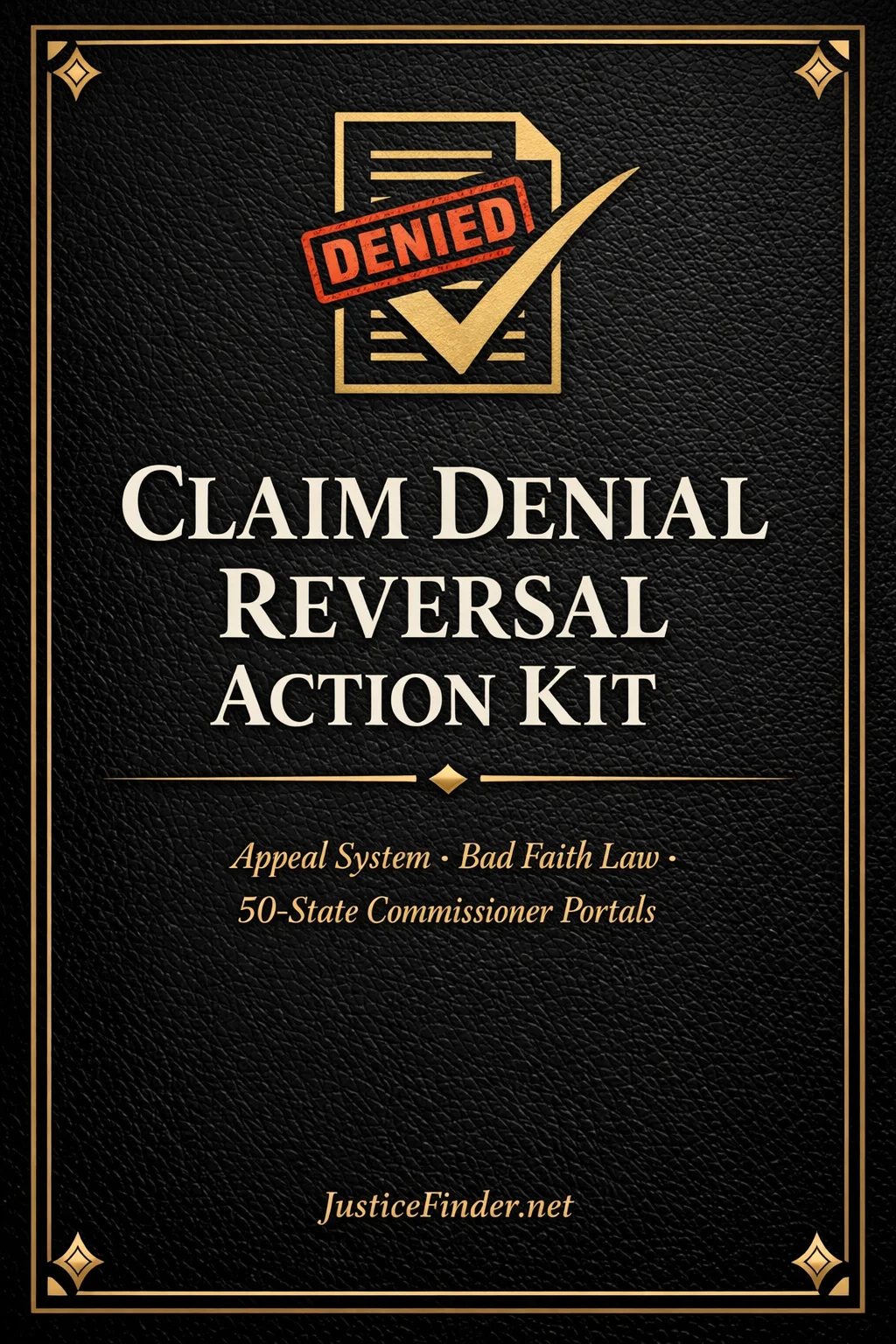
A denial is not the end. Use a structured appeal process to challenge wrongful denials, respond to underpayment, and escalate through state regulatory channels when insurers act in bad faith.
Refund
30-day window
Format
PDF · keep
Delivery
Instant
What's Inside
The Solution
Teaches how to decode the denial letter, identify appeal grounds, draft a written appeal with supporting evidence, file a state insurance complaint, and recognize bad-faith conduct.
Teaches how to read a denial letter and identify which grounds are legally contestable.
Includes a written appeal framework with evidence attachment checklist.
Covers state insurance department complaint filing and bad-faith escalation paths.
Source Anchors
This guide references official government sources, not opinion.
USAGov Consumer Complaint Routing
Official starting point for vehicle and consumer complaint escalation paths.
CMS Medicare Secondary Payer Recovery
Official Medicare recovery workflow relevant to settlement timing and lien math.
NHTSA Traffic Records Standards
Crash-documentation and reporting fields that shape evidence quality.
The Problem
Most denial letters look final but are not. Claimants abandon valid claims because they do not know how to decode denial reasons, write effective appeals, or escalate through state insurance regulators.
Built for:
Claimant whose personal injury or insurance claim was denied, delayed, or underpaid.
Who This Is For
What You'll Learn
Why This Matters Now
Insurance companies open their claim file the day of your accident. Every day you wait without a system is a day they build theirs. This guide is not about reading — it is about taking the right actions before leverage is permanently lost.
Free Tools That Pair With This Guide
Frequently Asked Questions
Read the denial letter carefully to identify the stated reason, do not sign any release or settlement agreement, note any deadlines for appeal mentioned in the letter, and begin gathering documentation that contradicts the denial basis. The Kit's denial reason decoder walks through this process for the 10 most common denial categories.
Yes. Most insurance policies include an internal appeal process that you can use without an attorney. The Kit's appeal letter framework provides a paragraph-by-paragraph structure for writing a formal appeal that cites policy language, contradicting evidence, and state statutes where relevant.
Internal appeal deadlines vary by policy and state law — typically 30 to 180 days from the denial. Some state statutes impose separate deadlines for bad-faith claims or regulatory complaints. The Kit's deadline section covers the most common timeframes and warns against waiting.
Bad faith occurs when an insurer unreasonably denies, delays, or undervalues a valid claim. Indicators include denying without investigation, refusing to communicate, ignoring submitted evidence, or using fabricated grounds for denial. The Kit's bad-faith identification checklist covers 12 specific conduct patterns recognized by state courts.
Each state's Department of Insurance has an online complaint portal. File with your policy number, a chronology of events, copies of denial letters, and your claim documentation. The Kit includes a step-by-step complaint filing guide with what information each state form typically requires.
Attach the original denial letter, any supporting medical records that contradict the denial basis, independent repair or damage assessments, relevant policy language (highlighted), photographs, and any prior correspondence the insurer ignored. The Kit's evidence attachment checklist is organized by denial type.
Lack of communication is itself a potential bad-faith indicator. Send all follow-up by certified mail with return receipt, document every unanswered call with date and time, and escalate to the state insurance commissioner if the pattern continues for more than 30 days. The Kit covers escalation protocols step by step.
Yes, particularly if the denial was wrongful or in bad faith. In bad-faith cases, some states allow you to recover extra-contractual damages including attorney fees and punitive damages beyond the policy value. The Kit explains the legal framework and when escalating to an attorney for a bad-faith lawsuit is appropriate.
A first-party denial is from your own insurer (collision, uninsured motorist, health). A third-party denial is from the at-fault party's insurer. Appeal rights, deadlines, and regulatory remedies differ between the two. The Kit covers both denial types with separate response strategies.
Internal appeals typically take 30–60 days from submission. If you escalate to the state insurance commissioner, resolution can take 60–180 days. Lawsuits take longer but create the strongest pressure. The Kit explains what to expect at each stage and how to keep pressure on the insurer throughout the process.
Educational claim appeal guidance only. Insurance appeal deadlines, bad-faith standards, and complaint procedures vary by state. Consult licensed counsel before waiving rights or signing releases.
Continue Exploring
JusticeFinder is designed so every visit can turn into a concrete next step, whether that means opening a calculator, reading a guide, organizing records, or searching the library directly.
Read JusticeFinder elsewhere
TikTok, Instagram, and Threads — short-form legal explainers from the editorial team.
Tap to load PayPal buttons securely.